


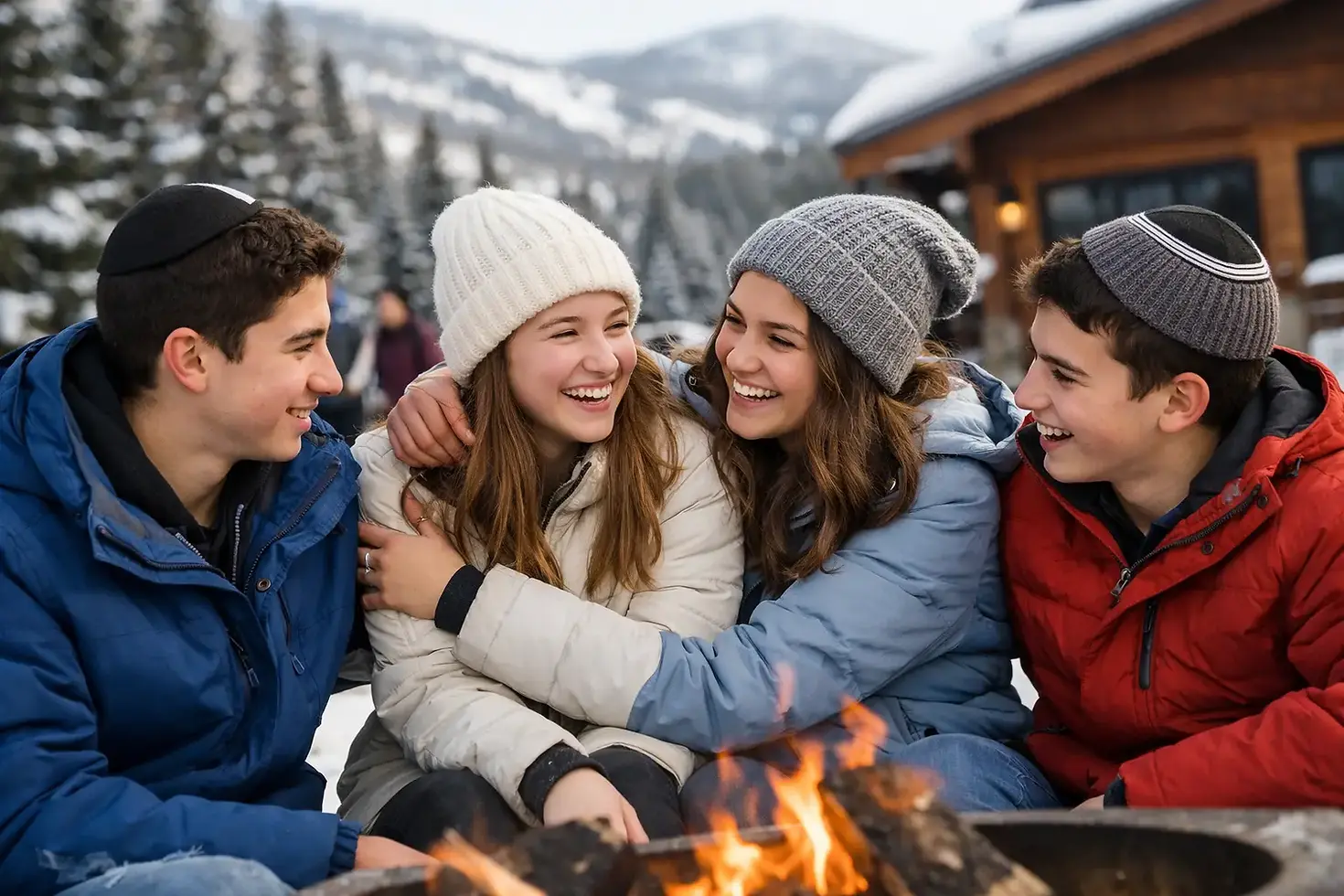
Jewish Teen Winter Retreats That Build Belonging
Winter break can be a long stretch of unstructured time for teens. Jewish teen winter retreats turn those days into something more meaningful: a few days away with new friends, shared laughter, Jewish learning that feels relevant, and the relief of being part of a group where no one has to explain their background.
For Russian-speaking Jewish families across the Bay Area and Northern California, that sense of ease matters. Teens may be connected to Jewish life in very different ways. Some grew up attending holiday events or Hebrew classes. Others know family stories, Russian language, favorite foods, and a strong connection to Israel, but have had fewer chances to meet Jewish peers their own age. A winter retreat can create a welcoming first step without asking a teen to arrive with all the answers.
Why Jewish Teen Winter Retreats Matter
A good retreat does more than fill a school vacation. It gives teens time away from homework, social media pressure, and the routines that can make it hard to try something new. Whether the program is held in the mountains, at a camp site, or at a retreat center within driving distance, the change of setting creates room for real conversation.
Teens often make connections at retreat in the in-between moments: sitting together after an activity, singing late into the evening, sharing snacks in a cabin, or talking honestly about family, identity, and what they hope for next. Those moments are hard to schedule in a one-hour weekly program. Over a few days, friendships have time to become genuine.
Jewish content also lands differently in this environment. Instead of feeling like another class, learning can be woven into Shabbat, music, games, discussions, creative projects, and group traditions. Teens can ask questions about Judaism, Israel, antisemitism, family history, and Jewish values in a space that welcomes curiosity. There is no single right level of observance required to belong.
For many participants, the most lasting outcome is simple: they return home knowing other Jewish teens who understand parts of their life that classmates may not. That confidence can carry into future camps, youth programs, community events, leadership opportunities, and eventually Israel travel.
What a Meaningful Winter Retreat Includes
The strongest retreats balance fun, rest, connection, and purpose. Teens need space to be teenagers, not a packed schedule that feels like school moved to a different building. At the same time, a retreat should offer more than entertainment. The goal is to leave with memories and a stronger sense of belonging.
Days may include outdoor activities, sports, art, team challenges, music, workshops, and time to relax with friends. The exact activities depend on the location and weather. A snowy setting may make winter recreation part of the experience, while a local retreat may focus more on indoor creativity, community service, and group-building. Both can work well when the program is thoughtfully led.
Jewish life should feel present throughout, not limited to one formal session. A Shabbat celebration can become the emotional center of the retreat, with candle lighting, songs, a festive meal, reflection, and time to unplug together. Teens who have never experienced Shabbat in a peer community may be surprised by how meaningful it feels. Teens who already know the traditions can help shape the atmosphere and welcome others in.
Russian-speaking families may also value cultural familiarity alongside broad Jewish participation. That can mean hearing Russian spoken naturally, sharing stories of immigration and family resilience, or meeting counselors and peers who understand the particular mix of Soviet Jewish heritage, American life, and connection to Israel. Cultural comfort is not a substitute for Jewish learning. It can make Jewish learning feel more personal and accessible.
Peer Leadership Makes a Difference
Teen retreats are most successful when young people are invited to contribute, not just attend. Older teens can lead a discussion, help welcome first-time participants, organize a game, share a personal story, or take responsibility for a Shabbat moment. These are small opportunities with real impact.
Leadership should not be reserved for the loudest teen in the room. A thoughtful participant who notices when someone is sitting alone, helps set up an activity, or encourages a nervous new camper is also building community. Retreat staff can make room for many styles of leadership.
How Parents Can Choose the Right Retreat
The right program depends on a teen's personality, experience, and comfort level. A teen who already knows people from camp may be eager for a longer overnight retreat. A first-time participant may do better with a shorter program, a familiar friend attending alongside them, or a retreat close enough that parents feel comfortable with the travel plan.
Before registering, families should ask how the program supports emotional and physical safety. Clear supervision, experienced staff, accessible health procedures, transportation details, lodging arrangements, and communication plans are essential. Parents should also understand the retreat's approach to Jewish practice, food, Shabbat, and participation. The best programs explain these details clearly while making room for families with different traditions.
Cost is another practical consideration. Retreats can involve transportation, lodging, meals, activities, staff, and supplies, which can make the full price feel out of reach. Families should not assume that cost means a program is unavailable. Scholarships, vouchers, grants, and subsidized opportunities may be available through community organizations and program partners.
RSJC works to make Jewish experiences more financially accessible for Russian-speaking Jewish families because participation should not depend only on a family's ability to pay. Asking about support is not an inconvenience. It is a responsible way to help a teen access the friendships, learning, and community that can shape their future.
Helping a Teen Feel Ready to Go
Some teens sign up immediately. Others want to go but worry that they will not know anyone, will feel awkward, or will not fit in. Parents can help by treating those concerns seriously without letting anxiety make the decision alone.
It helps to talk through what the retreat will actually be like: who will be there, what a typical day may include, how roommates are assigned, and when teens can contact home. If possible, encourage your teen to attend with a friend or connect with another participant before departure. Even one familiar face can make arrival easier.
At the same time, leave room for a teen to have their own experience. A retreat is often where young people discover they can start a conversation, join a group, or try a Jewish tradition without a parent beside them. That independence is part of the value.
Packing can become a simple way to reduce pre-retreat stress. In addition to weather-appropriate clothes, teens may need comfortable shoes, a reusable water bottle, medications, personal items, and anything required by the program. Families should review the packing list together and avoid sending valuables that would be hard to replace.
The Connection Should Continue After Winter Break
A retreat should not be an isolated weekend on a calendar. The best programs create a next step before teens return home. That might be a local teen gathering, a volunteer project, a holiday celebration, summer camp, a leadership role, or an Israel-focused program for older participants.
Parents can support that momentum by asking more than, “Did you have fun?” Try asking which moment made them feel most comfortable, who they met, what surprised them, or whether there is an activity they would like to do again. Teens may not share everything immediately. A relaxed question a few days later can open a more meaningful conversation.
Winter retreats do not need to transform a teen overnight to be worthwhile. Sometimes the lasting change begins with one friend, one Shabbat song, one late-night conversation, or the quiet realization that Jewish community has a place for them exactly as they are.


Comments