


Jewish Family Programming That Grows Belonging
A child who sings a holiday song at home, a parent who recognizes familiar Russian conversation at a community gathering, and a grandparent who shares a family memory over a festive table are all taking part in Jewish continuity. Jewish family programming creates room for those moments to happen naturally - not as a test of what a family knows or how they practice, but as an invitation to belong.
For Russian-speaking Jewish families across the Bay Area and Northern California, belonging often needs both warmth and practical access. A meaningful program should welcome the child attending for the first time, the parent looking for community, and the relative who wants to pass along a story, recipe, tradition, or connection to Israel. It should also recognize a simple reality: camp, classes, travel, and holiday events can be costly. When participation is accessible, more families can say yes.
What Jewish Family Programming Can Make Possible
The strongest family experiences do more than fill a calendar. They help Jewish life feel personal, social, and possible at every stage of life. A Shabbat dinner can become a place where children make friends. A camp experience can give a young person confidence in their Jewish identity. A holiday celebration can reconnect adults with traditions they remember from childhood or wish to learn more about now.
For many families, cultural familiarity matters too. Hearing Russian spoken alongside English, meeting people with shared immigration histories, or celebrating with others who understand the rhythms of Russian-speaking Jewish life can lower the barrier to joining in. At the same time, programs should make room for families with different backgrounds, observance levels, and household traditions.
This is not about creating one correct version of Jewish participation. Some families may come first for a Purim celebration or a children’s activity. Others may be seeking Hebrew education, a Jewish summer camp, an Israel experience, or a way for grandparents and grandchildren to spend meaningful time together. Each entry point can lead to a deeper relationship with community.
Jewish Family Programming Starts With Shared Experiences
A family does not need to commit to every event or program to build a lasting connection. One positive experience, especially one where a child feels seen and a parent feels welcomed, can change what feels possible next season.
Holidays give traditions a living context
Holiday gatherings are often the most accessible starting point. Children can make a craft, hear a story, sing, taste traditional food, and see Jewish celebration as something joyful rather than distant. Adults have the chance to connect with peers, ask questions without embarrassment, and create new memories around traditions they may know well or be encountering for the first time.
The value is not only in the activity itself. When families celebrate with others, traditions gain a social context. A menorah lighting, Passover gathering, or Purim program reminds participants that Jewish life is carried by people, not only by information. For Russian-speaking families, a culturally welcoming setting can make that connection especially immediate.
Learning works best when it reaches home
Jewish education has greater impact when it does not stop at the classroom door. A child who learns a Hebrew word, a holiday custom, or an Israel-related story benefits even more when there is an easy way to share it at home. Parents do not need to be experts. A simple question at dinner - “What did you learn today?” - signals that Jewish learning belongs to the whole family.
Programs can support that bridge by giving families conversation starters, songs, recipes, or small traditions to try together. The goal is not to add pressure to already busy weeks. It is to offer manageable ways for Jewish identity to become part of ordinary family life.
Camp creates confidence and connection
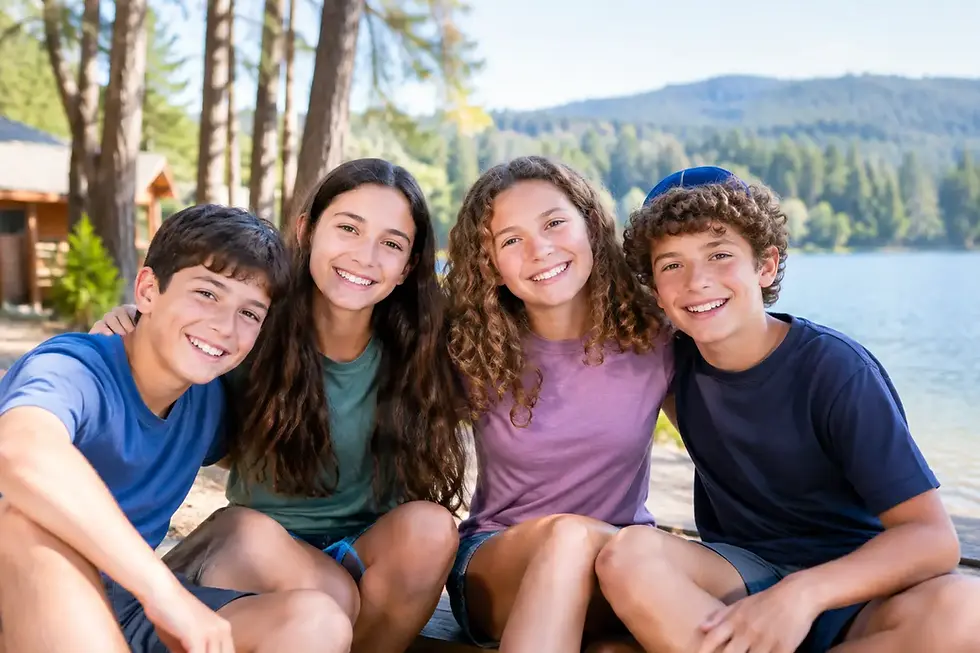
Jewish camp is often where children and teens discover that they are not alone in their identity. They form friendships, practice independence, participate in Shabbat and holiday traditions, and return home with stories that stay with them. For parents, camp can also open a wider community network and give children a sense of pride in who they are.
Day camp and overnight camp serve different needs. A younger child may be ready for local day camp, while an older teen may be looking for the independence and deeper peer bonds of an overnight experience. Cost should not decide whether a child gets that opportunity. Camper vouchers, grants, and incentives can make a formative Jewish summer more reachable for families who would otherwise have to decline.
Build a Path, Not a One-Time Event
The most meaningful programs recognize that family needs change. A preschooler, a middle-school student, a teen, a young adult, and a grandparent may all be looking for different forms of connection. The answer is not to make every gathering serve every age equally. It is to create a community pathway where each person can find an appropriate next step.
A younger child may begin with holiday programs and Hebrew education. As friendships grow, camp can become a natural next experience. Teens may look for leadership opportunities, peer programs, and a stronger relationship with Israel. Young adults may be ready for social events, Birthright opportunities, or volunteer travel. Parents can find their own friendships and opportunities to give back, while seniors remain vital carriers of memory, language, and tradition.
That life-stage approach matters because Jewish continuity is not built in a single season. It grows through repeated encounters: a familiar face at a holiday gathering, a child excited to return to camp, a teen who sees a future in Jewish community, and a parent who decides to volunteer or invite another family along.
RSJC helps make those connections possible through programs, grants, and community experiences designed for Russian-speaking Jews throughout the region. The most useful support is both personal and practical: an encouraging welcome, clear information, and financial help that turns interest into participation.
Make Access Part of the Welcome
Families should not have to choose between meaningful Jewish opportunities and essential household expenses. Financial barriers are real, particularly when parents are considering camp tuition, educational programs, or travel experiences for more than one child. A welcoming community names that reality directly and offers concrete help.
Subsidies, scholarships, vouchers, and highly subsidized trips are more than financial transactions. They communicate that every family’s participation matters. They also help create a community that is broader and more representative, rather than limited to those who can comfortably absorb the full cost.
Still, affordability is only one part of access. Timing, transportation, language, dietary needs, and a family’s comfort level can shape whether an opportunity feels truly available. The best programs explain what to expect in plain language and make it easy to ask for help. Parents should be able to understand who a program is for, what their child will do, what support may be available, and how to take the next step.
How Families Can Choose the Right Next Step
There is no need to begin with the biggest commitment. A family deciding where to start can consider what would feel most useful right now. Is the priority helping a child make Jewish friends? Finding a welcoming holiday celebration? Exploring camp options? Building a connection to Israel? Meeting other Russian-speaking parents?
It also helps to involve children in the choice. A child who chooses between a holiday activity, a class, or camp is more likely to arrive with curiosity. Teens, especially, need programs that respect their independence and offer genuine peer connection rather than a prescribed experience. For some, a local gathering is the right beginning. For others, an Israel trip or leadership opportunity may be the moment that makes Jewish identity feel real and relevant.
Families can also grow community one invitation at a time. Bring a friend to a gathering. Tell another parent about a camp voucher. Ask a grandparent to share a holiday memory. These small gestures build the trust that turns an event into a community.
The next meaningful Jewish family experience does not need to be complicated. Choose one opportunity that feels welcoming, affordable, and right for your family now. Show up with your questions, your stories, and your children. A community becomes stronger each time a family finds a place at the table.


Comments