


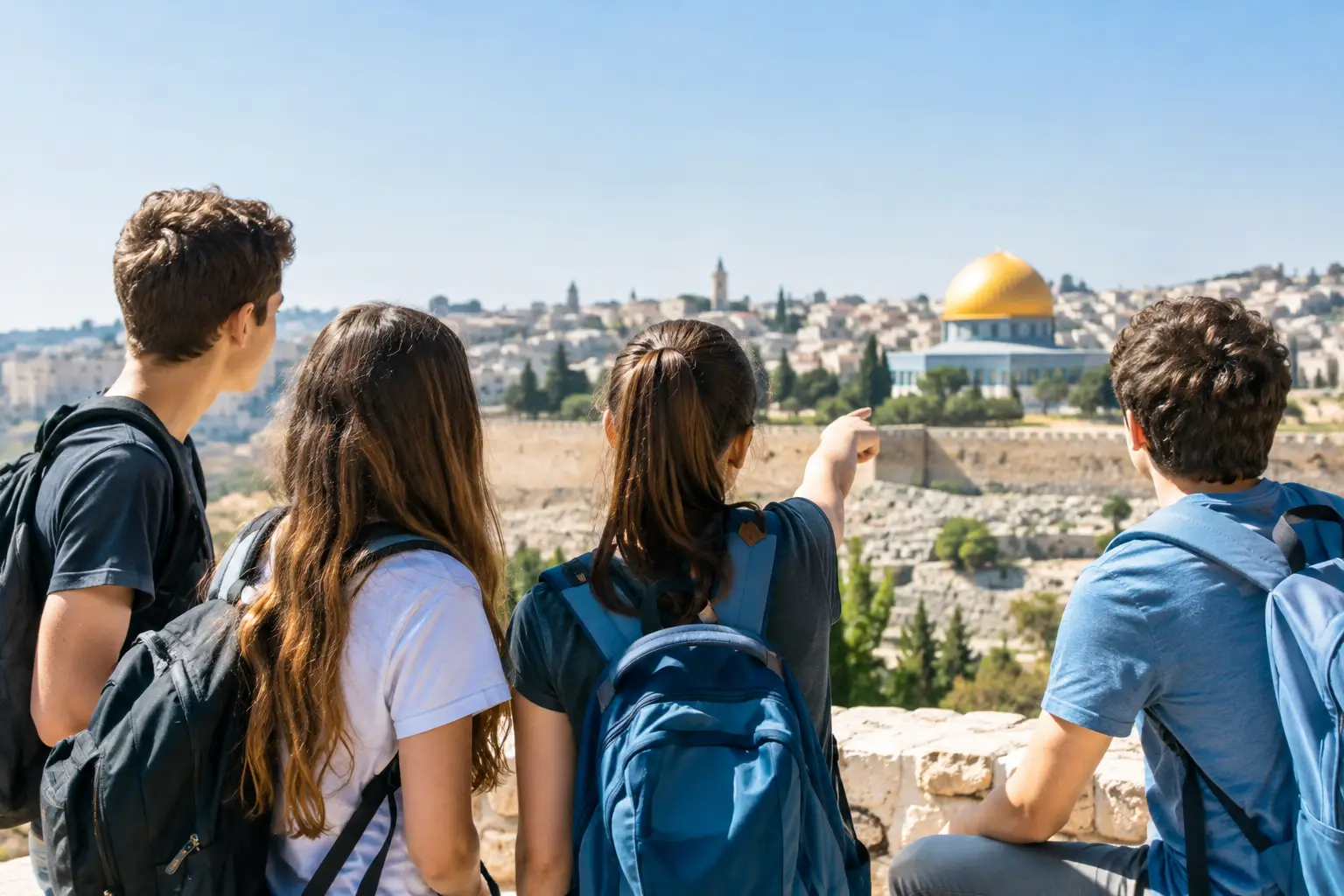
How Teens Explore Israel and Find Their Place
A teen may remember the first view of Jerusalem from a hilltop, the noisy breakfast table with new friends, or the quiet moment of standing beside the Mediterranean more clearly than any itinerary. How teens explore Israel is not simply about visiting famous places. It is about experiencing a living Jewish homeland with their own questions, friendships, language, and point of view.
For Russian-speaking Jewish families across the Bay Area and Northern California, an Israel experience can also create a bridge. Teens may recognize pieces of home in the Russian heard in a group conversation, then discover how many different stories, traditions, and identities exist within the Jewish people. That combination of familiarity and discovery can make the experience feel personal rather than distant.
Israel becomes real through people
Maps and history lessons matter, but relationships are usually what make Israel stay with a teenager. Meeting Israeli peers, counselors, soldiers, educators, artists, and community members gives teens a human connection to a country they may have known mainly through family stories, news, or social media.
A conversation with an Israeli teen can be especially powerful. They may compare school, music, family expectations, volunteering, and everyday routines. They may find surprising similarities, along with real differences. Those conversations help replace assumptions with curiosity.
Group travel also gives teens room to form friendships with Jewish peers from their own region. For some participants, this is the first time they have spent extended time with other Jewish teens outside a holiday gathering or classroom. Shared bus rides, hikes, meals, and late-night conversations can build a sense of belonging that continues after the trip ends.
How teens explore Israel beyond the postcard stops
Places such as Jerusalem, Tel Aviv, the Galilee, the Negev, and the Dead Sea are meaningful because they hold layers of Jewish history and contemporary life. A strong teen experience gives participants time to see those layers instead of rushing from one photo stop to another.
In Jerusalem, teens may walk through ancient streets, visit places of prayer, and consider what it means for one city to matter so deeply to many communities. In Tel Aviv, they can see a modern, creative city shaped by beaches, technology, food, art, and activism. In the north, they may encounter landscapes connected to Biblical stories, agriculture, and diverse local communities. In the desert, the scale and quiet can invite reflection that is hard to find at home.
The goal is not to tell teens what they must feel. It is to offer enough context, care, and space for them to notice what moves them. One teen may be drawn to archaeology, another to street art, another to Israeli music, and another to a conversation about Jewish responsibility. Each response can be a valid starting point for connection.
History is stronger when it has a personal voice
Teens often engage most deeply when history is connected to a person or place in front of them. Hearing a guide explain an ancient site is valuable. Hearing a family story, visiting a museum that raises difficult questions, or participating in a memorial moment can make history feel immediate.
This does not mean every moment must be heavy. Israel travel should include joy: swimming, hiking, tasting new foods, celebrating Shabbat, dancing, and laughing with friends. Meaning grows when teens experience the full rhythm of the country, including its creativity, warmth, complexity, and ordinary daily life.
Honest questions belong on the itinerary
Today’s teens encounter constant information about Israel online. Some of it is thoughtful, some is misleading, and much of it is emotionally charged. A meaningful trip does not ask teens to leave their questions behind. It gives them trusted adults, age-appropriate context, and respectful space to ask.
They may want to understand Israeli society, security, religious diversity, immigration, public debates, or the realities of living in a country that is both ancient and changing. Adults do not need to have a perfect answer to every question. They do need to listen carefully, distinguish facts from slogans, and model how to hold complexity without losing compassion.
This approach builds confidence. Teens learn that Jewish connection does not require them to ignore hard topics. It asks them to show up, learn more, and care about the people affected by the issues they discuss.
Service turns learning into responsibility
Service projects can help teens see that Israel is not only a destination but a shared responsibility. Depending on the program and current local needs, participants may support community organizations, prepare care packages, assist with agricultural work, visit people who serve the public, or contribute to projects that strengthen local communities.
The value is not in checking off volunteer hours. It is in learning that Jewish peoplehood includes action. Teens see how small acts of help can matter and begin to ask how they can bring that same responsibility back to California.
Service also requires humility. A short visit does not make someone an expert on another community’s needs. The best programs are guided by local partners and designed around what is genuinely helpful, safe, and appropriate at that time.
Safety and flexibility build family trust
Parents deserve clear information when considering an Israel program. Travel plans should include experienced staff, established local partners, clear communication procedures, appropriate supervision, and a willingness to adjust plans when conditions require it.
Israel travel is never one-size-fits-all. Program routes, activities, and timing may change based on security guidance, weather, participant needs, or local circumstances. That flexibility is not a weakness. It is part of responsible planning.
Before enrollment, families should ask practical questions about the group’s staffing, accommodations, transportation, medical procedures, communication expectations, educational approach, and cancellation policies. Teens should also understand the expectations for respectful group behavior and personal responsibility. Clear preparation helps everyone focus on the experience itself.
The trip matters most after the flight home
The return home is where an Israel experience can either fade into photos or become part of a teen’s Jewish life. A thoughtful program creates follow-up opportunities: reunions, leadership roles, volunteering, holiday celebrations, youth events, and conversations with peers who shared the journey.
Parents can help without turning every dinner into a lesson. Ask what surprised them. Ask which person they remember. Cook something they enjoyed, play a song they brought home, or invite them to share one story at a family gathering. Let their connection develop at its own pace.
For teens who want more, Israel travel can become a next step toward summer camp, Jewish learning, volunteer service, youth leadership, or a future young-adult program. For others, the impact may be quieter: greater comfort in a Jewish space, a new friendship, or a stronger sense that Jewish history includes them.
A journey that makes room for every teen
Not every teen arrives with the same background. Some come from highly engaged Jewish homes; others know little Hebrew or Jewish tradition. Some speak Russian with grandparents, while others mainly understand English. Some are eager to travel, and some are nervous about joining a group. A welcoming Israel experience does not treat those differences as barriers.
It makes room for questions, different levels of knowledge, and the many ways young people connect to heritage. Financial accessibility matters, too. A transformative experience should not be reserved only for families who can easily afford it. Scholarships, subsidies, and community support can turn an opportunity into a real possibility.
RSJC helps connect Russian-speaking Jewish families with welcoming, accessible pathways to Jewish life and Israel experiences. When teens travel with caring guidance and a community behind them, they return with more than souvenirs. They return knowing there is a place for their voice, their heritage, and their future in the Jewish story.


Comments