


A Russian-Speaking Family Resource Guide
A child’s first campfire song, a grandparent’s holiday story, a teenager finding Jewish friends who understand their family background - these moments build belonging over time. This Russian-speaking family resource guide is for Bay Area and Northern California families looking for practical ways to make Jewish life accessible, meaningful, and welcoming without assuming that every family begins in the same place.
Some families speak Russian at home and are rediscovering Jewish traditions after generations of silence. Others already celebrate holidays, attend synagogue, or send children to Jewish programs. Many are balancing demanding work schedules, rising costs, and the wish to give their children a connection to heritage. There is room for all of these experiences in Jewish community life.
Start with the support your family needs now
The best first step is not trying to do everything at once. Consider what would make the biggest difference for your family this season. For a young child, that may be a first Jewish camp experience. For an elementary school student, it could be Hebrew learning or a holiday program. For a teen, it may be meeting peers, developing leadership skills, or preparing for an Israel experience.
Parents can begin by asking a few simple questions: What kind of Jewish connection feels natural for our family? What is difficult to afford? Which age group needs community most right now? The answers can help turn a long list of opportunities into a manageable next step.
Financial support is often part of the decision. Camp tuition, educational programs, travel, and family events can add up quickly. Look for camper vouchers, grants, scholarships, subsidized trips, and incentive programs before assuming a program is beyond reach. Many community resources are designed specifically to reduce cost barriers for Russian-speaking Jewish families.
Jewish learning that meets children where they are
Jewish education does not need to look the same in every household. Some children are ready to learn Hebrew letters and holiday blessings. Others may begin with Jewish music, crafts, stories, food, or friendships. What matters is that the experience is positive, age-appropriate, and connected to real life.
For younger children, look for programs that make Jewish learning active. A child who helps make challah, sings a Shabbat song, or hears a family story about a Jewish holiday is not simply receiving information. They are forming memories that can travel with them into adulthood.
School-age children may benefit from Hebrew education, Jewish history, cultural programs, and opportunities to ask honest questions. Families do not need to be highly observant to participate. A welcoming program should make space for children who know many traditions as well as those who are hearing Jewish words and stories for the first time.
Consistency helps, but perfection is not required. If weekly participation is not realistic, choose a holiday event, a family workshop, or a seasonal program that fits your schedule. One meaningful experience can become the beginning of a lasting family practice.
Bring learning home in small ways
Community programs work best when children can share what they learned at home. Ask them to teach you a song, explain a new Hebrew word, or help choose one holiday tradition to try together. Keep the tone curious rather than corrective. The goal is not to test knowledge. It is to show children that Jewish identity belongs in family life, not only in a classroom or at an event.
Camp can be a turning point
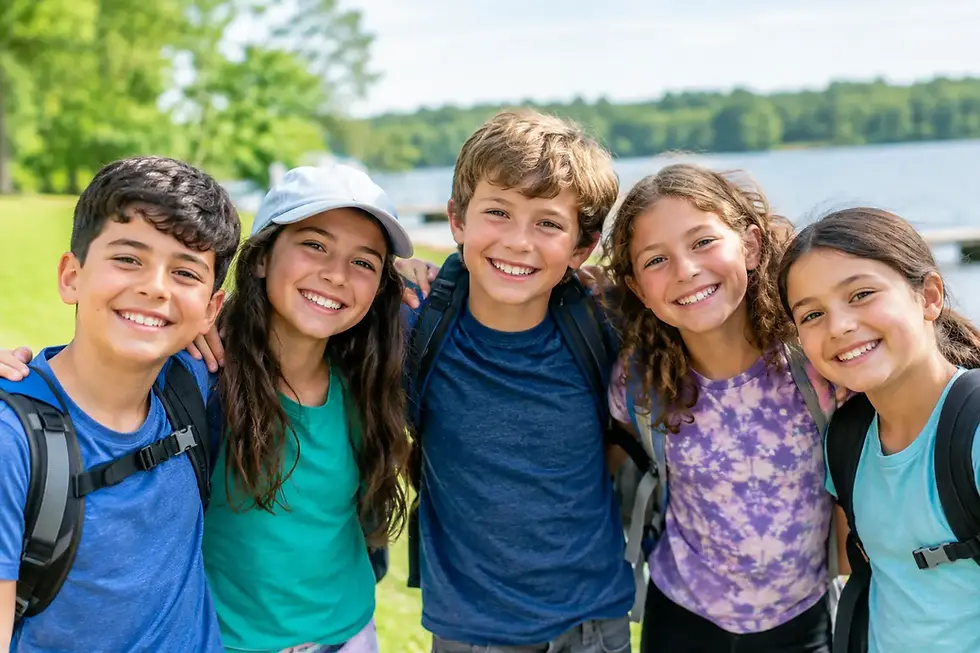
For many Russian-speaking Jewish families, Jewish day camp or overnight camp is the place where children first feel that Jewish identity is social, joyful, and completely normal. They build friendships, spend time outdoors, learn traditions through everyday activities, and see counselors who make Jewish life feel relevant.
A first camp experience can also bring understandable questions. Parents may worry about cost, transportation, food, safety, language, homesickness, or whether their child will fit in. These concerns deserve clear answers. Ask camp staff about the daily schedule, communication with parents, dietary accommodations, staff training, financial aid, and the experience they have welcoming first-time campers.
Day camp may be the right start for a younger child or a family trying camp for the first time. Overnight camp can offer greater independence and deeper peer connection, but it is not automatically the best choice for every child. Consider your child’s readiness, not what other families are doing.
When financial support is available, apply early. Voucher and scholarship deadlines may come before families have finalized their summer plans. Gathering paperwork in advance and asking questions early can make the process less stressful.
Give teens a community of their own
Teen years can be a critical period for Jewish continuity. Young people often decide whether Jewish life feels meaningful based less on what adults tell them and more on whether they have friends and mentors who make them feel seen.
Look for teen programs that combine social connection with real responsibility. Retreats, volunteer projects, cultural gatherings, leadership activities, and Israel-focused learning can give teens a place to explore identity without pressure to have every answer. A strong program should welcome teens with different levels of Jewish knowledge and help them find their own voice.
Israel travel can be especially powerful when it is paired with preparation and follow-up. A trip may inspire a teen or young adult, but the relationships and reflection afterward help turn that experience into ongoing connection. Ask what support participants receive before travel, how groups stay connected afterward, and whether there are ways to continue learning or volunteering locally.
Make holidays a family gathering point
Jewish holidays offer a natural way to bring generations together. A community celebration can be especially valuable for families who want to participate but do not feel ready to host a large holiday gathering on their own. Children see other families celebrating, adults reconnect with familiar foods and songs, and seniors have a place to share memories.
Choose holiday experiences that feel inviting rather than intimidating. You do not need to know every custom before attending. Come to light candles, hear music, share a meal, meet neighbors, or let your children join an activity. Participation can begin with simply being present.
At home, build on what feels sustainable. Perhaps that means a Friday night dinner once a month, a menorah in the window, a Passover question from a child, or calling relatives before a holiday. Small traditions are not lesser traditions. They are often the ones children remember most clearly.
Find connection across generations
A healthy community makes room for grandparents, parents, children, teens, and young adults. Each generation carries something valuable. Seniors may bring language, stories, resilience, and memories of family traditions. Parents create the conditions for children to participate. Young people bring energy, questions, and new ideas.
When possible, choose opportunities that create intergenerational contact rather than separating every age group. A cultural event, holiday celebration, volunteer day, or family retreat can make space for relatives to enjoy Jewish life together. This matters deeply in Russian-speaking families, where cultural memory and family bonds are often closely connected.
RSJC helps connect Russian-speaking Jews throughout the Bay Area and Northern California with programs, incentives, and gatherings across life stages. If you are unsure where to begin, asking about the next age-appropriate program or available financial support is enough. You do not need a complete plan before reaching out.
A simple way to choose your next step
Instead of collecting every possible resource, choose one opportunity for the next three months. It might be applying for camp support, attending a holiday event, enrolling a child in Jewish learning, or encouraging a teen to try a retreat. Put the date on the calendar and make participation achievable.
Then notice what changes. Did your child make a friend? Did your family try a new tradition? Did you meet another parent who understands your experience? Community grows through repeated moments of recognition. The next meaningful Jewish experience for your family may be closer, more affordable, and more welcoming than you think.


Comments